



centering position control rolling mill
Comprehensive Analysis: Reversible Rolling Mill & Hot/Cold Rolling Production Line Solutions In modern steel processing, reversible rolling mill technology has become a pillar for steel plants seeking high flexibility, quality control, and cost efficiency. This article delves deep into advanced rolling solutions—connecting hot strip steel mill , cold rolling mill , and dual-purpose reversible rolling mill design. We analyze its industrial application, structural parameters, process advantages, and leading vendors—offering actionable insights for decision-makers in the metallurgy, petrochemical, and heavy machinery sectors. Industry Trends & Technology Overview The global market for reversible rolling mills is projected to reach $790 million by 2027 ( ResearchAndMarkets 2023 ), exhibiting a CAGR of 4.7% from 2021–2027. Key growth drivers include metallurgy upgrades, demand for ultra-thin high-strength steels, and integration of digital automation. Hot strip steel mills remain dominant for high-capacity flat products but are increasingly complemented by flexible reversible rolling mill solutions for specialized and small-lot orders. Cold rolling mills play a pivotal role in achieving high surface quality, tight tolerances, and advanced alloying. IoT Integration Predictive Maintenance Energy Efficiency Smart Automation Key Definitions Reversible Rolling Mill : Rolling mill where slabs, billets or strips are fed back and forth through the same stands, allowing bidirectional rolling for high accuracy and flexible output. Hot Strip Steel Mill : Large-scale plant specializing in hot-rolling steel at >900°C, ideal for initial reduction and high-volume strip production. Cold Rolling Mill : Facility for further processing pre-rolled material at room temperature, achieving precise thickness, superior flatness, and surface finish. Process Flow of Reversible Rolling Mill Reversible Rolling Mill Manufacturing Flow Diagram Billet/Slab Prep Heating Furnace Descaling (H2O jets) Rolling (Multi-pass) Cooling, Inspection & Coiling Billet/Slab Preparation : Ensures correct geometry, surface quality (e.g. shot blasting), and identifies defect points. Heating Furnace : Brings material to optimal temperature (hot: 1100–1300°C or cold: room temp); critical for grain structure. Descaling : High-pressure water jets remove surface scale—crucial for surface integrity. Reversible Rolling : Passes material forward and backward (multi-pass reduction 55–80%), with precise adjustment for each cycle. Cooling, Inspection, Coiling : Controlled cooling (often laminar), automatic NDT (non-destructive testing), and device-assisted coiling. Key Process Features: Fully automated, CNC-guided stand adjustment Online thickness and flatness monitoring ISO 9001 & ANSI-compliant calibration & traceability Integrated water cooling & descaling for energy savings Predictive bearing/roll change warning (via sensors) View detailed process online > Technical Specifications & Product Parameters 1. Key Parameters of Reversible Rolling Mills Parameter Hot Reversible Rolling Mill Cold Reversible Rolling Mill Application/Notes Roll Diameter (mm) 400–1200 250–700 Impacts reduction force & final surface quality Rolling Force (kN) 4000–35000 1500–12000 Depends on material grade & width Max Material Width (mm) 800–2200 700–1850 Adapts to demand flexibility Rolling Speed (m/min) 5–25 10–40 Automated speed adjustment Final Thickness (mm) 1.5–16 0.1–3.0 Cold rolling achieves ultra-thin precision Stand Arrangement 2-High/4-High/6-High 4-High/6-High/12-High 4-high: Strength & flexibility; 6-high: Precision/flatness Main Drive Power (kW) 600–3000 350–1800 Energy efficiency improves by up to 16% (latest gen.) Control System PLC + HMI panel PLC + HMI panel PC-based diagnostics, remote troubleshooting Hot/Cold Rolling Production Line – Core Technical Indices Feature Unit Hot/Cold Rolling Production Line Industry Standard/Range Material Suitability - Carbon Steel, Alloy, Stainless, Copper, Aluminum Steel, Aluminum, Specialty Alloys Line Length m 40–130 30–160 Max Coil Weight ton 40 10–45 Yield Strength (max) MPa 980 (optional up to 1200) 800–1200 Thickness Tolerance mm ±0.005 (cold), ±0.03 (hot) ±0.007 (cold) Annual Output Mt 0.15–1.2 0.08–1.8 Surface Finish Ra (µm) 0.25–0.9 (post-cold) ≤1.0 Energy Consumption kWh/t <160 (hot), <105 (cold) <180 (hot), <120 (cold) Automation Level - Full PLC+HMI+IoT Remote Manual–Full Auto Certifications - ISO 9001, CE, ANSI, SGS - Comparative Performance: Hot/Cold Rolling Production Line vs Industry Average (Higher is better except for thickness tolerance & energy) Material, Manufacturing & Standards Roll Material: High-chromium cast iron, forged steel (ISO 4957, GCr15, Cr12MoV), capable of up to 60,000 tons between regrind. Frame: Alloy carbon steel (Q235B, Q345D), optimized for stress dispersion and long-term rigidity. Bearing & Shaft: Spherical roller bearings (SKF, NSK certified), ultra-precision CNC-machined spindles. Surface Treatment: Hard chrome/nitride coatings for anti-corrosion and extended roll life. Compliance: ISO 9001:2015 SGS ANSI B11.17 Market Leaders & Manufacturer Comparison Vendor Country Key Strengths Certifications Notable Projects Primetals Technologies Germany/Austria/Japan Full automation, digital twin, high capacity (>2Mt/year) ISO, CE, ANSI, TUV ArcelorMittal Bremen (Germany) Danieli Italy Flexible configurations, green process, rapid install ISO, CE, SGS P.O.S.C.O. S. Korea, China Steel Taiwan YWLX China 1-stop, hot/cold dual-line, custom line integration ISO, CE, ANSI, SGS Baosteel, Shougang Group, JISCO TMEIC Japan/USA Advanced drive control, predictive IIoT monitoring ISO, CE U.S. Steel, Tata Steel, JSW SMS Group Germany Modular design, AI edge-correction ISO, CE, TÜV SSAB Sweden, ThyssenKrupp Germany Custom Solutions: From Inquiry to Delivery Consultation: Product selection (hot/cold, rolling force, automation), line simulation, application-matching. Design: 3D line layout, digital twin modeling, FEA (finite element analysis) for frame rigidity, ISO/ANSI verification. Manufacturing: CNC components, in-line NDT (eddy-current/ultrasound), advanced surface treatments for anti-corrosion. Assembly & FAT: Full mechanical/electrical assembly, Factory Acceptance Test (FAT) per IEC/ISO standards. Onsite Installation & Training: Onsite guidance, ISO-conforming install, operator upskilling (remote/VR optional). After-sales/Support: 24/7 hotline, spare parts in stock (roll, bearing, electrical), remote/factory upgrade. Lead Time: Typical delivery is 120–180 days from contract/engineering approval; fast-track is available on consultation. Warranty & Service Commitment: All Hot/Cold Rolling Production Lines are covered by 24 months/30,000 tons (whichever first) warranty. Parts are traceable via unique ID, and on-demand maintenance contracts (up to 10 years) are available. ISO/SGS traceability certified. Application Scenarios & Case Studies Reversible rolling mill systems are transforming heavy manufacturing through their exceptional adaptability. Here’s how leading factories deploy them: Case Study 1: Petrochemical Pipeline Steel (API 5L X70/X80) A major Middle East oil & gas EPC uses a 4-high reversible rolling mill to produce thin-walled pipeline steel coils (800–1800mm width, 7–13mm thickness), meeting API 5L and ISO 3183 standards. Benefits: yield increase 8%, online surface inspection, and zero reported corrosion failures in 36 months. Why it works: Bidirectional rolling enables market-responsive batch changeovers and consistent grain refinement, reducing operational downtime by 25%. Case Study 2: Automotive High-Strength Steel A Tier-1 car OEM in China integrated YWLX hot/cold production line for AHSS (advanced high strength steel, 440–980 MPa). Annual capacity reached 220,000t. Defect ratio dropped to 1.2%. Energy usage per ton reduced by 19% over legacy mills, thanks to sensor-based automation and adaptive cooling. Case Study 3: Stainless Strip for Food/FDA Applications For a Southeast Asian stainless producer, a 6-high cold reversible rolling mill yields ultra-thin strip (0.22–0.5mm), achieving Ra 0.31 µm surface. It passes FDA direct contact standards. Downtime for roll changeover: <2 hours via CNC adjustment. Case Study 4: Custom Copper Strip for Electronics Japan-based circuit substrate manufacturer tailored line to achieve 0.14–0.35mm copper strip at ±0.008mm thickness—vital for PCB and connector markets. Optional inline eddy-current detection enhances defect reduction. Professional FAQ on Reversible Rolling Mills & Rolling Lines Q1: What materials are most suitable for rolls in a reversible rolling mill ? Rolls are typically forged from high-chromium steel or cast iron alloys (e.g., GCr15, Cr5, Cr12MoV), providing high wear resistance, compressive strength, and thermal stability per ISO 4957 . Q2: What is the standard installation tolerance for cold rolling lines? According to ISO 9445-1:2009 , the roll gap setting tolerance is typically ±0.005mm. Levelness between mill stands must be ≤0.03mm/m. Q3: Can hot strip steel mill and cold lines be integrated in one facility? Yes, modern plants deploy hybrid lines with shared control rooms, automated transfer, and digital twin simulation to switch between hot/cold passes—a signature of the Hot/Cold Rolling Production Line . Q4: How is surface finish measured and controlled? Via stylus profilometer (per ISO 4287 ). Ra for cold strip can reach 0.20–0.8µm. On-line optical systems with AI-based defect mapping are increasingly used. Q5: What is the expected service life of a reversible rolling mill ? Well-maintained lines: 18–27 years, depending on annual usage & material. Roll change intervals: 3,000–6,000 tons, bearings: >24 months continuous. Warranty/maintenance plans extend asset life further. Q6: What differentiates 2-high, 4-high, and 6-high mills? 2-high: Simplicity, lower capex. 4-high: Flexibility for plates/strips; 6-high: Advanced edge, flatness and thin strip control—preferred in specialty and stainless production. Q7: What certifications should a modern line have? ISO 9001 (management), CE (EU conformity), ANSI (US safety), SGS (QA/QC), and customer-specific standards such as API/FDA for specific steel grades. Customer Feedback & Support Users from metallurgy, automotive, and energy sectors report: Consistent output quality ( <1.5% defect rates); >97% on-time delivery Remote diagnostics cut unplanned downtime by 31% Certifications support rapid global market entry (EU, US, MENA, Asia) Technical support: 24/7 hotline ; field service in 24–72h (global main regions) Conclusion: Why Invest in Reversible Rolling Mill Technology? Reversible rolling mill platforms offer unmatched flexibility for high-mix/low-volume and specialty metals markets. Advanced automation, stringent international standards, and proven application scenarios reduce risk and elevate competitive advantage. Hybrid lines—like the Hot/Cold Rolling Production Line —enable one-stop production for diversified, market-responsive steel and alloy products. Data-backed vendor comparison and traceable production ensure investment protection, compliance, and operational longevity. Feedback, warranty, and lifecycle support assure customer confidence worldwide. Authoritative References & Further Reading: [1] "Tech Innovations in Reversible Mill Automation", SteelOnTheNet.com Technical Articles [2] "Energy Efficiency Trends in Cold/Hot Strip Mills", Metallurgical Industry J. [3] "Modern Hot/Cold Rolling Mills", ResearchGate [4] "ISO 9001 Quality Control in Steel Processing", ISO Official Portal [5] "Forum: Selection of Rolling Mill Configurations", ENG-TIPS Metallurgy Forum

We have successfully executed over 500
projects around the world,
many first-of-their-kind
research projects and products in China, including
We have successfully executed over 500
projects around the world,
many first-of-their-kind
research projects and products in China, including
-
2004
The 1st hydraulic AGC system for hot rolling of ribbon steel
-
2006
The 1st AFC system used for 1450mm skin pass mill
-
2009
The 1st 5-stand tandem line with 2-stand POR & Uncoiler for 650mm ribbon steel
-
2012
The 1st reversing mill for 1380mm strip
-
2016
The 1st soft-rolling system used in skin pass mill
-
2019
The 1st fully automated medium-width tandem cold rolling mill
-
2021
The 1st 5000KN Twin-stand double skin pass mill
-
2022
The 1st coupled pickling line & tandem cold mill with two modes - big roller & small roller
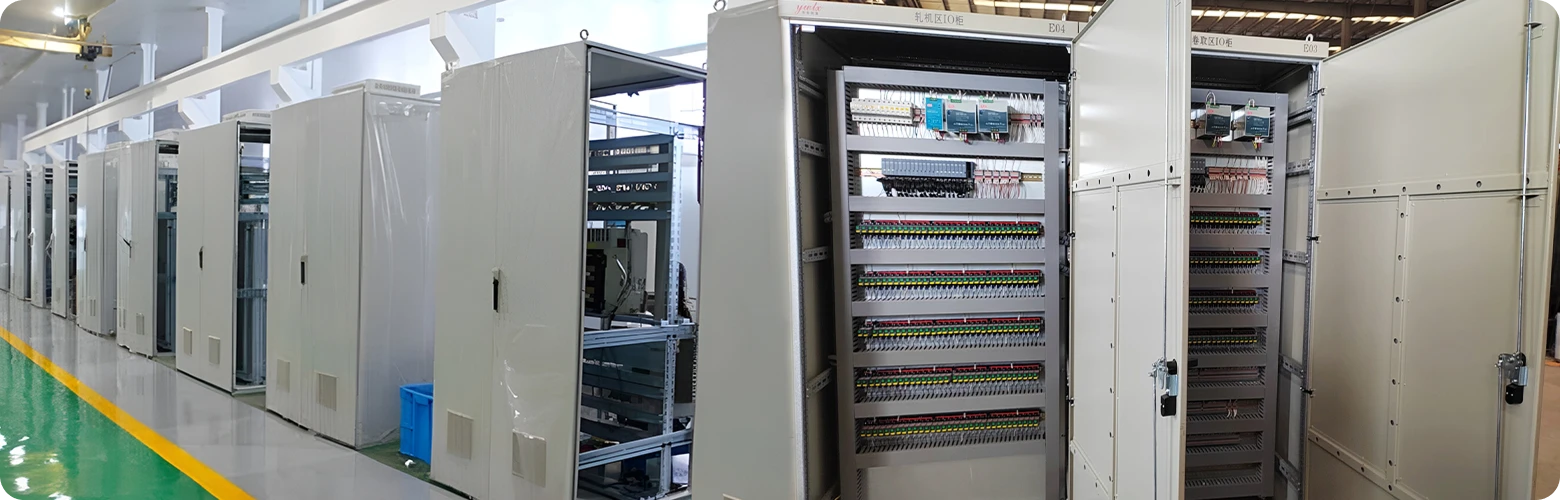
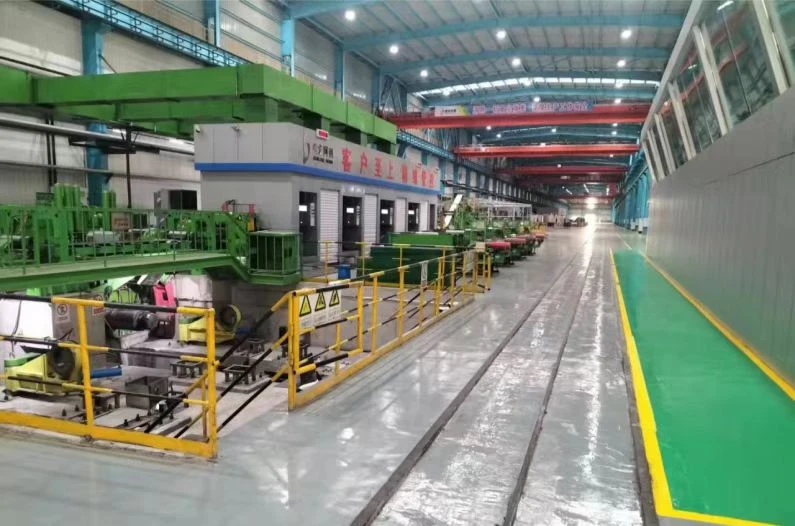

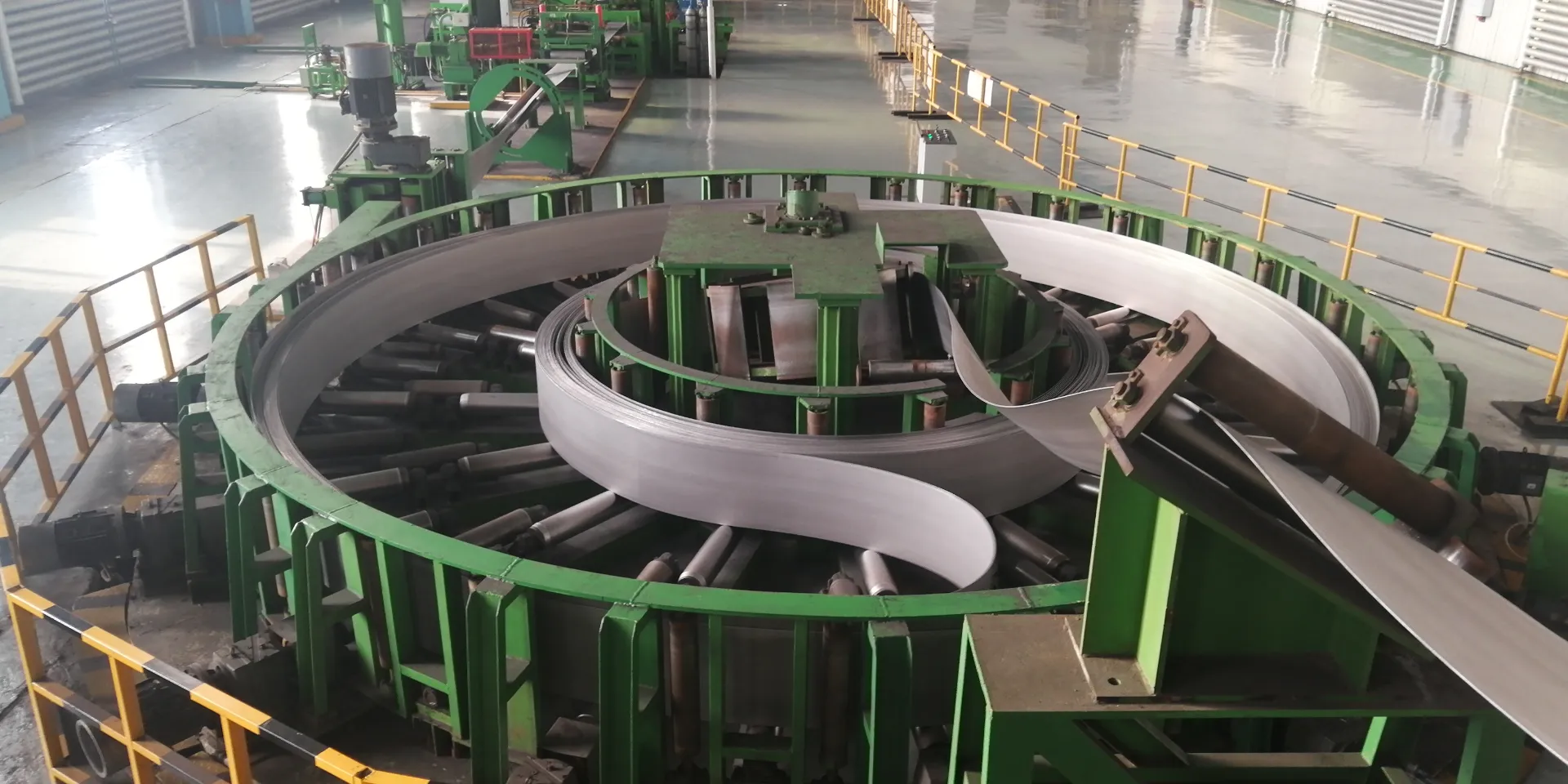
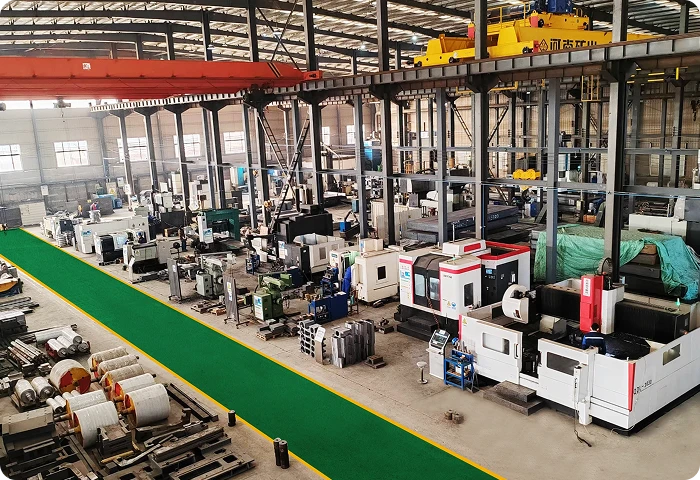
Yang Wang Li Xin operates a state-of-the-art facility over 66,000 square meters,and our manufacturing facility is fully equipped with high-tech machinery and high-capacity cranes. This enables us to handle large work pieces measuring 4.5m in width, 10m in length, and 1.5m in height, guaranteeing our capacity to produce 1800mm skin-pass mills and 1450mm rolling mills. The individual piece can weigh up to 100 tons.

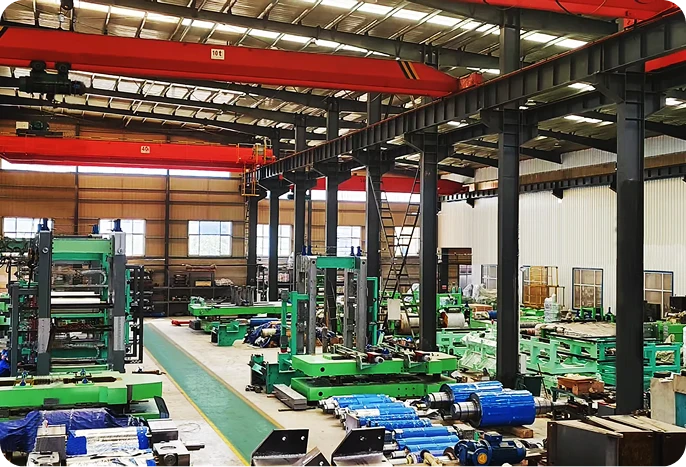

Quality is fundamental to the enterprise survival. We have established a comprehensive and meticulous quality management system and have successfully obtained ISO14000 certification. Starting from the design source, it supervises the entire production cycle, including design, procurement, processing, assembly, in-factory testing, installation, and online commissioning. The workshop is equipped with measuring tools like vernier calipers, spectrometers, hardness testers, and ultrasonic flaw detectors. They are used to check materials and control tolerances to ensure the final equipment meets or exceeds requirements. All products have a unique code, This enables the easy identification and traceability of the equipment components and ensures full control of quality.


-
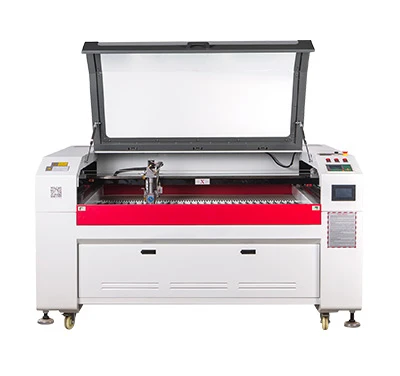 Cladding Rolling Mill-YWLX|Energy Efficiency&Environmental ProtectionYWLX (Beijing Yang Wang Li Xin Sci&Tech Co., Ltd.) has emerged as a leader in the field of cladding rolling mill technology, offering cutting-edge solutions that address the evolving needs of industries ranging from electronics to automotive manufacturing. This article delves into the technical features, advantages, applications, and company background of YWLX's advanced cladding rolling mill syst
 -
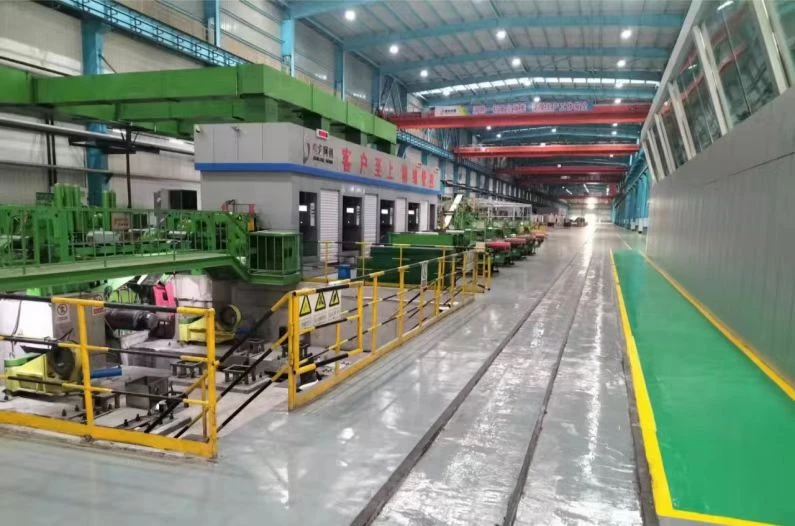 Cladding Rolling Mill - Beijing Yang Wang Li Xin Sci&Tech Co., Ltd.|Advanced Cold Rolling Technology for High-Quality Metal CompositesCladding technology has become a cornerstone in modern industrial manufacturing, enabling the production of high-performance metal composites that combine the properties of different materials. The Cladding Rolling Mill developed by Beijing Yang Wang Li Xin Sci&Tech Co., Ltd. (YWLX) represents a significant advancement in this field. This article provides an in-depth analysis of the product's tech
 -
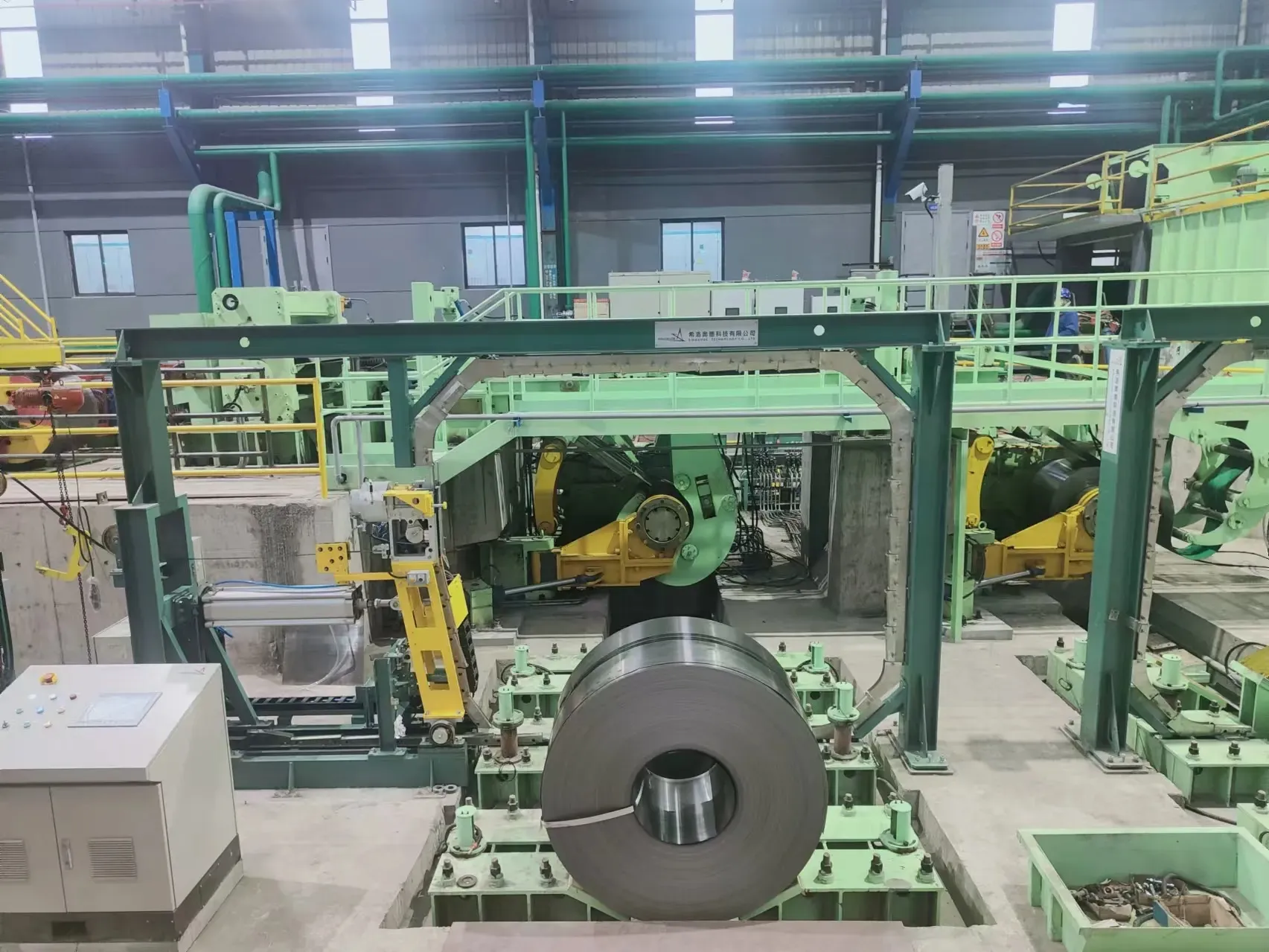 Suppliers of Cold Rolled Steel Products and Their Market InfluenceCold Rolling Suppliers A Comprehensive Guide Cold rolling is a crucial process in the metalworking industry, where metal sheets and strips are transformed into thinner gauges with enhanced properties. This technique not only improves the metal's mechanical characteristics but also provides a superior surface finish. For manufacturers in need of cold-rolled products, understanding the landscape of


